


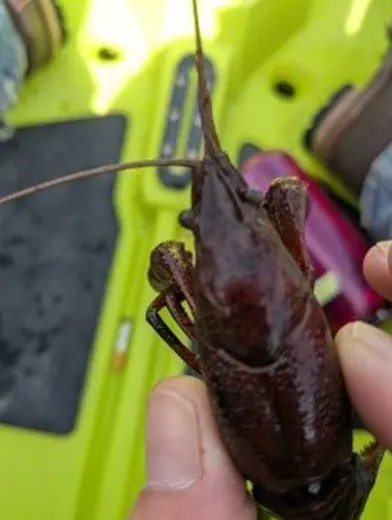
An invasive crayfish has been found in Cass County.
The Michigan Department of Natural Resources says the red swamp crayfish was located in a Niles area pond by the Southwest by Southwest Corner Cooperative Invasive Species Management Area, or CISMA, in mid-September.
The CISMA’s Alex Florian tells us they weren’t even looking for it, but found two dead specimens in the water while studying vegetation. He says the red swamp crayfish originates in the southern United States and is indeed a problem.
“Red swamp crayfish are kind of the classic crayfish boil crayfish that you might get down south,” Florian said. “They’re native to Louisiana and a lot of the southern U.S., but they’re invasive up here in Michigan. They’re really aggressive. They displace our native crayfish. They also eat our native vegetation. They harm our native fish. They dig these burrows into the banks of rivers and streams and lakes, which causes erosion because they’re digging into that surface.”
Red swamp crayfish have been prohibited in Michigan since 2014 and were first detected in the state in 2017. The closest they’ve been found to Niles was at the Wolf Lake State Fish Hatchery in Mattawan. We asked Florian if the CISMA is concerned the crayfish will make it into other nearby waters.
“It’s definitely possible. It’s super late in the season right now, which makes it hard for us to go out and look, but we’re planning next year to do some follow up monitoring in nearby ponds because they can walk, like they’ll get on land and walk.”
Infestations are believed to result from the release of aquarium pets, live bait, or live crayfish brought to Michigan for crawfish boils. Ways to combat red swamp crayfish are limited. Florian says they include intensive trapping, the use of some pesticides, and potentially, using largemouth bass.
We asked Florian what someone should do if they spot a red swamp crayfish.
“What we’d really love is reports of this invasive species. Like I said, they live in burrows, so even if we go out to a site, it’s easy for us to miss them. But if people have seen crayfish, especially with red bumps or like raised red bumps anywhere on their claws or anywhere on their body, it could be a red swamp crayfish, and we really appreciate those reports being sent to us.”
You can learn more about the Southwest by Southwest Corner CISMA here. Florian’s contact information is available on the page.